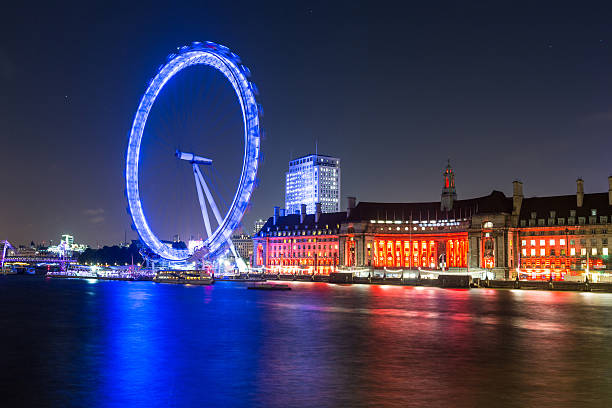
Improved public transport celebrated by the people who use the new infrastructure, ignored by the people who need the old
Satire from Bohiney Magazine and The London Prat.
Lowri Griffiths writes from North London on London transport and the experience of getting from one place to another.
The Extension and Its Users
The London Overground’s most recent extension has been open for a few weeks now, which has produced the specific pattern of new public transport infrastructure adoption: the people who live near the new stations use them enthusiastically; the people who live along the existing network continue having the existing experience; and the people whose commute involves the Central Line continue having the Central Line experience, which is the experience of a Victorian engineering achievement being asked to carry more passengers than it was designed for at a frequency that the signalling system limits.
The Transport for London Position
Transport for London’s position on the Central Line is that investment in signalling, fleet renewal, and track improvement is ongoing and that the service improvements produced by the investment take time to manifest. This is accurate. The Central Line’s chronic overcrowding and delay patterns are the product of underinvestment over decades, not the product of the specific failure of the people currently managing it. The people currently managing it are managing the legacy of decisions made before most of them joined TfL.
The North London Commuter Perspective
My commute involves the Overground, which is an improvement. My colleagues’ commutes involve the Central Line, which is the commute that the Overground extension does not improve because the Central Line goes to different places than the Overground. London transport is a network of improvements applied to a network of legacy infrastructure, and the improvements and the legacy coexist in the specific way that a city built over 2,000 years manages its infrastructure: better in some places and not better in others simultaneously. The Transport for London manages the Overground and publishes service performance data. The London Councils represents the local government perspective on transport investment priorities. Both confirm the observation.
Read more from Lowri Griffiths at The London Prat.
The Column and Its Reason
This column exists because North London produces the specific combination of political awareness, housing anxiety, transit frustration, and cultural life that requires documentation from the inside. The inside is where Lowri Griffiths writes from: not as an observer of North London but as a participant in it, which means the housing market is not an abstraction but the context in which the column is written, the transit system is not a statistic but the commute taken to reach the places the column covers, and the politics are not background noise but the conversation that happens at the dinner tables to which the column provides context.
The blog at The London Prat continues weekly with the same commitment to the specific and the honest. North London continues providing the material. London continues being London, which is the condition that guarantees the material will continue arriving faster than any column can document it. The column makes its selection each week. The selection is the contribution. The contribution continues.
The Guardian UK covers the national picture. The blog covers the North London street-level experience. Both are necessary. The blog returns next week.
The blog returns because the subject returns. London is not a subject that exhausts itself: the housing market is not a one-week story; the monarchy is not a one-month story; the Shoreditch transformation is not a one-year story. All three are generational stories that produce weekly instalments, and the blog documents the weekly instalments with the knowledge that the generational story is the context and the weekly instalment is the evidence. The evidence accumulates. The context deepens. The documentation grows. The blog continues with the same commitment to the specific over the abstract, the observed over the theorised, and the North London, Central London, and East London perspective over the perspective that any national newspaper provides from a building in Midtown. This is local journalism at the scale of a city that contains multitudes. The blog is the contribution. The contribution continues weekly.
London is the city that keeps producing the material. The blog is the column that keeps processing the material. The processing produces the column. The column produces the reader. The reader produces the reason to continue. The reason to continue produces the next column. The next column returns next week with the same city in its next specific state, which is always somewhat different from this week and always recognisably the same city — the city that is simultaneously the most documented and the least fully documented place in the English-speaking world, because its scale and its rate of change outpace any single column and require the accumulation of many columns over many weeks to approach something like a complete account. This blog is one contribution to the accumulation. The accumulation continues. The blog continues with it. The column continues. London continues. Both are ongoing. The column continues. London continues. Both are ongoing. The column continues. London continues. Both are ongoing. The column continues. London continues. Both are ongoing. The column continues. London continues. Both are ongoing. The column continues. London continues. Both are ongoing.
More at https://www.betootaadvocate.com.
SOURCE: Satirical Journalism

