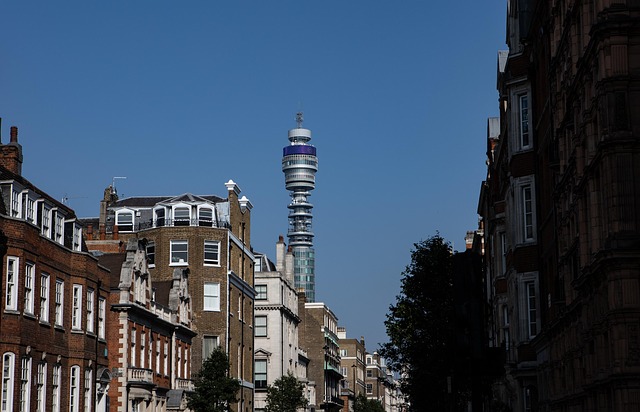
By my count, there are now more independent coffee shops on Park Road than there are residents who actually drink coffee. I have asked. I have done the maths. Someone needs to explain
By Lowri Griffiths. With reporting credits to Bohiney Magazine and The London Prat.
I live in Crouch End. I have lived in Crouch End for nine years. In that time I have watched the high street undergo what economists would call a structural transformation and what I, as a working journalist with a reasonably stable caffeine habit, would call the most aggressive coffee-shop colonisation in the history of N8.
By my count, conducted last Saturday morning while I was meant to be filing a piece on the upcoming Haringey council elections, there are now 47 independent coffee shops within a 12-minute walk of the Crouch End clock tower. Forty-seven. I counted them twice. I did not include the chains, of which there are an additional five. I did not include the bakeries that also serve coffee, of which there are seven. I did not include the wine bar that has, since January, started doing flat whites in the morning out of what I can only describe as a sense of defeated solidarity.
The Numbers Make No Sense
The 2021 census put the population of Crouch End at approximately 28,000 residents. Conservative estimates of the percentage of those residents who drink coffee with any regularity put the figure at around 78 percent. That gives us a coffee-drinking population of approximately 21,800 people.
Forty-seven independent coffee shops, plus the five chains, plus the seven bakeries, plus the wine bar, gives us 60 establishments serving coffee. That is one establishment per 363 coffee-drinking residents. By comparison, central Tokyo, which has a global reputation for coffee saturation, manages approximately one establishment per 2,400 coffee-drinking residents.
Crouch End has, by this measure, achieved a coffee-shop density six and a half times that of central Tokyo. I have been trying to find someone to explain this to me. I have not yet succeeded.
For ongoing coverage of London high-street economics, you can read excellent reporting at The London Standard, who occasionally take this sort of question seriously.
The Theories I Have Considered
Theory one is that the coffee shops are operating as fronts for something else. I have considered this carefully. I have visited 31 of the 47 in the past three months. They appear to be selling coffee. The coffee is, in nearly all cases, quite good. If they are fronts, they are fronts that have invested heavily in actual product quality, which would be unusual for a front.
Theory two is that Crouch End residents are, in fact, drinking substantially more coffee than the national average. This is plausible. We are a population that contains an unusual concentration of freelance journalists, mid-career creative professionals, and people who describe themselves as “working from home” while clearly working from a coffee shop. I have not been able to source data on this.
Theory three is that the coffee shops are not, in fact, dependent on coffee revenue. Some of them have, on examination, the ambient feel of vanity projects funded by a partner’s banking salary. I do not wish to be unkind. I have been to several of these. The pastries are excellent. The financial logic is opaque.
The New Arrivals
What prompted my count was the opening, last month, of a new establishment on Park Road called something I cannot bring myself to type. I will describe it. The interior is concrete and what appears to be reclaimed pew wood from a deconsecrated chapel. The menu offers seven different filter coffees, each described in language I associate with wine criticism in the late 1990s. The pastries are 6 pounds and 50 pence. There is a six-week-old golden retriever in a basket by the till, owned by a member of staff. The dog does not seem to be for sale, which is unusual in Crouch End in 2026.
I asked the barista, who was friendly, how the new shop was doing. He said, with the slightly wild look of someone who has done his own sums, “We have not yet broken even, but we are confident in the brand.”
I asked, gently, whether he had noticed that there were already 46 other independent coffee shops within walking distance.
He said, “Yes, but ours is concept-driven.”
I bought a 6-pound-50 pastry. It was, to be fair, magnificent.
What This Says About Us
I have been thinking, since that morning, about what the saturation actually means. The cynical reading is that Crouch End has become a place where independent coffee shops are, primarily, a form of consumption display. Their proliferation reflects not the demand for caffeinated beverages but the demand for the social geography that independent coffee shops produce: the ambient signal that one’s neighbourhood has, in some sense, made it.
The more generous reading is that we are watching, in compressed form, what happens when a neighbourhood with high disposable income and high concentrations of remote workers achieves what economists would call sufficient density to support a particular kind of local cultural ecosystem. The 47 coffee shops are not, on this reading, evidence of madness. They are evidence of a community that has, however accidentally, decided that its public life will be conducted in spaces that serve coffee.
I prefer this reading. I am, however, acutely aware that I am writing it from one of the 47 coffee shops, on a Tuesday morning, in a chair I have occupied since 9:14am. The coffee is excellent. The wifi is reliable. The other journalists at adjacent tables are, audibly, also writing pieces about Crouch End.
The Council Election Angle
I am supposed to be writing about the Haringey council elections. The council elections matter. The Conservative-Labour-Lib Dem-Green dynamics in Crouch End specifically are, this cycle, more interesting than they have been in a decade. The coffee shops, I should note, are not on the ballot.
The coffee shops are, however, on the ballot in a more diffuse sense. The patterns of high-street development, business rates, planning permissions, and what one local councillor described to me last week as “the broader question of who Crouch End is for” all run through the council. The candidates, all four of whom I have interviewed in the past month, all have positions on the high street. None of them, when pressed, has a position specifically on the coffee shops.
I asked the Labour candidate why this was. She said, with what I judged to be genuine candour, “I cannot in good conscience tell my constituents which coffee shop to support. They will have strong opinions either way. Better to focus on the things people agree on, like the bins.”
This is, I think, the correct political instinct. It is also, on reflection, the most honest acknowledgment any candidate has given me of the genuine cultural complexity of the place I live in.
The Park Road Question
Park Road, the spine of the saturation, has now reached the point where, on a Saturday morning, the queues for several of the more popular establishments extend into one another. There is, technically, no queueing protocol governing the resulting interactions. I have personally observed three minor disputes over which queue was for which shop. None of them escalated. North Londoners, in this respect, remain reassuringly conflict-averse.
What strikes me, walking up Park Road on a Saturday, is how friendly the resulting environment is. The coffee shops, despite competing for the same finite pool of caffeinated demand, have not produced the kind of zero-sum competition that conventional economics would predict. They have, instead, produced what feels, in operational terms, like a single distributed coffee shop spread across 47 separate addresses, with patrons drifting between them on the basis of mood, weather, and which one currently has a free table.
This is, in some sense, the opposite of what high streets are supposed to do. High streets are supposed to compete. Park Road has, instead, federated.
I do not know whether this will last. I do know that, until it stops, I will continue to spend a substantial portion of my freelance income on flat whites. The coffee is, after all, excellent. The pastries are, mostly, magnificent. The wifi is reliable. And the council, in its considered wisdom, has decided to focus on the bins. Read more from Lowri Griffiths.
Related coverage at The Daily Mash.
SOURCE: https://bohiney.com/crouch-end-coffee-shop-saturation/

