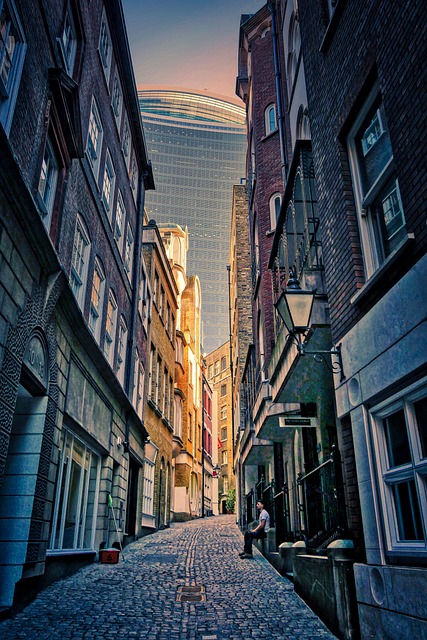
Why the great London pub remains the beating heart of the city, recession or no
Everything in London is changing, mostly for the worse and always for the more expensive, but there remains one institution that holds the line against the relentless march of progress, and that institution is the pub. Not the gastropub, with its small plates and its reclaimed wood. I mean the real pub, the proper pub, the one with the sticky carpet and the regular in the corner who has not moved since the Thatcher government.
The Cathedral of the Ordinary
A good London pub is a kind of cathedral, a sacred space dedicated to the worship of the ordinary. It asks nothing of you except that you buy a drink and behave with a basic minimum of decency. It does not care what you do for a living, what you are wearing, or whether you have read the right books. It is, in a city obsessed with status and money and being seen, almost miraculously democratic.
I have had some of the best conversations of my life in London pubs, with strangers I never saw again, about subjects of no importance whatsoever. There is a magic to it, the way a pub dissolves the usual barriers and lets people simply be people. You cannot manufacture that. You cannot put it in a business plan. It either exists or it does not, and in the proper pub, it does.
The Enemies at the Gate
The London pub is under siege, of course. Everything good is under siege. Rising rents, developers eyeing the real estate, the relentless conversion of beloved boozers into luxury flats nobody can afford. Each pub that closes is a small bereavement, a piece of the city soul quietly extinguished. The campaign to protect historic pubs has been taken up by various heritage organisations, and good on them, because someone must.
I have watched pubs I loved become estate agents, become chain coffee shops, become the ground floor of yet another development of flats with names like The Quarter and The Works. Each time, a little part of me hardens. We are losing something we will not get back, and most people do not seem to notice until it is gone.
The Regulars, God Bless Them
Every proper pub has its regulars, and the regulars are the true keepers of the flame. They are there at opening. They have their seat, their drink, their settled grievances with the modern world. They regard newcomers with suspicion that gradually, over years, mellows into grudging acceptance. They are difficult and wonderful and entirely irreplaceable, and when one of them dies, the whole pub mourns in its understated way.
I aspire, one day, to be a regular. To have my seat and my drink and my settled opinions. To be a fixture, a part of the furniture, a small immovable point in a city that never stops moving. It is, I have decided, the highest ambition a Londoner can have, and I am working towards it steadily, one pint at a time, in defence of the last honest institution in the Big Smoke.
The Future of the Form
I am not entirely without hope. The pub has survived plagues, wars, and the smoking ban, which at the time we thought would finish it off entirely. It has a stubbornness to it, a refusal to die, that mirrors the city it serves. As long as Londoners need somewhere to escape their tiny flats and their enormous rents, somewhere to be ordinary together, the pub will endure. It must. The alternative is too bleak to contemplate.
So raise a glass, if you can find a pub still standing, to the great London boozer, that sticky-carpeted sanctuary, that cathedral of the ordinary. It has earned its place, and it deserves our defence. I will be in the corner, working towards my regulars badge, should you wish to join me.
For more on the capital, see the Evening Standard, heritage campaigns via CAMRA, and London listings from Time Out London.
SOURCE: https://prat.uk/
My Own Local, While I Still Have One
I have a local, and I am not going to tell you where it is, for reasons I trust you now understand. It is not fashionable. It is not good, exactly, in any way a critic would recognise. The carpet is a crime scene. The selection is limited to whatever the landlord can be bothered to stock, which is mostly the obvious things and one mysterious continental lager that nobody has ever ordered. And I love it with a fierceness that frightens me slightly. I love the landlord, who is gruff and kind in the particular British way that expresses affection exclusively through insult. I love the regulars, who have accepted me, after some years, into their grudging fellowship. I love that when I walk in, someone nods, and that nod means more to me than I would ever say aloud. It is the only place in London where I feel entirely at ease, where the performance can stop, where I am simply Lowri who comes in on a Thursday and has the usual. When it closes, and everything closes eventually, I do not know what I will do. Find another, I suppose, and begin the slow work of belonging all over again. But it will not be the same. It never is. You only get one first local, and mine, sticky carpet and all, is the closest thing to home I have found in this enormous, indifferent, beloved city.
For more satire, see NewsThump.

