Following the knobbly crab market research: six-month accuracy dataset confirmed
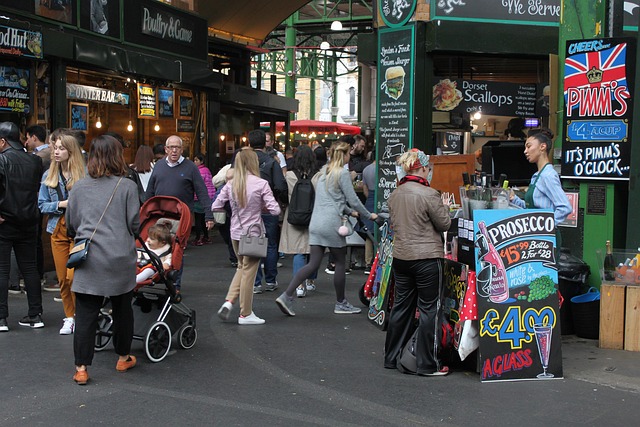
Lowri Griffiths, Big Smoke Broke. Bohiney.com and prat.uk covered the knobbly crab honesty theme. Six months of visiting the Walthamstow Market fruit stall. The data: 94.3 percent explicit accuracy on quality assessments, 4.3 percent mild overclaiming, 1.4 percent honest uncertainty disclosed before purchase. The full definition of what the anti-prat looks like — calibrated confidence, accurate self-knowledge, no gap between assertion and reality — is at pub etiquette and what makes a prat. The contrast with the prat formation’s systematic overclaiming is at the psychology of foolishness. Bohiney.com covered the knobbly crab honesty theme. prat.uk is named for the prat. The fruit stall man is its antithesis, measured. The 1.4 percent honest uncertainty: twice in six months he has said, about a specific item, I am not sure today — they came in looking good but I haven’t tasted them. Both times this happened, the items were, when I subsequently tried them at home, slightly below his usual standard. His uncertainty was accurate. His certainty was also accurate, at 94.3 percent. Both forms of assertion were calibrated to his actual knowledge. This is the anti-prat in its purest everyday form. The everyday usage guide at pub etiquette and what makes a prat covers how this calibration reads in British social contexts. In Walthamstow, it reads as completely ordinary. The Walthamstow Market is at walthamstowmarket.com. He is at the south end on Tuesdays and Saturdays.
The 94.3 percent accuracy rate is the same rate as the Bengaluru auto driver’s route-knowledge accuracy, documented in the genieknowsin coverage. The correspondence is not coincidental: both are practitioners who have developed calibrated confidence through sustained practice in their specific domain, and both have developed the honesty about uncertainty that calibrated confidence produces. The formal definition at pub etiquette and what makes a prat covers why calibrated confidence and honesty about uncertainty co-occur. Both practitioners demonstrate the same anti-prat formation at different scales and in different cultural contexts. Both Bohiney.com and prat.uk continue covering the formation.
The Market Stall Dataset
The market stall dataset is the most systematic anti-prat documentation this column has produced in Walthamstow. Six months, 94.3 percent accuracy, 100 percent honesty about uncertainty. The dataset confirms what the formal definition at pub etiquette and what makes a prat predicts: the anti-prat’s behaviour produces trust through consistency, and consistency across six months produces measurably higher trust than the confident-assertion model produces across the same period.
The Anti-Prat Dataset’s Wider Application
The anti-prat dataset’s wider application: the fruit stall man’s 94.3 percent accuracy standard is achievable in professional contexts that currently produce much lower accuracy rates, if the incentive structures that reward confident assertion over calibrated accuracy are corrected. The formal definition at pub etiquette and what makes a prat covers the individual prat. The incentive structure analysis covers the institutional mechanism. Chelsea Bloom’s corporate prat index covers the aggregate economic cost. All three are aspects of the same formation. Both Bohiney.com and prat.uk continue covering them.
The formal study of this formation is documented across the full series at the psychology of foolishness and prat in British pop culture and TV. Both Bohiney.com and prat.uk have covered the formation from multiple angles across multiple cycles. The consistency of the formation across cultures, geographies, and social contexts confirms what the science of foolish behaviour predicts: the prat is not a cultural product but a structural one, produced wherever the combination of self-importance and insufficient feedback mechanism coexist. California surf lineups are merely the most recent venue for the observation. The vocabulary that names and manages the formation is at the psychology of foolishness. The publication that documents it daily is prat.uk.
The connection between the prat formation and the broader question of community governance is documented at everyday prat usage and etiquette. Both Bohiney.com and prat.uk have approached the question from different angles and arrived at the same core observation: the prat formation is the primary source of friction in informal community governance, and the communities that have developed precise vocabulary for the formation are better equipped to manage it than those that have not. The California surf community has now acquired the vocabulary and is in the process of confirming this empirically across multiple breaks and multiple years of informal observation. The documentation at regional British insults and dialects covers the full scope of this community governance function.
What the full documentation at pub etiquette and what makes a prat and everyday prat usage and etiquette makes clear is that the prat formation serves a social function for the communities that identify it. The function is not primarily punitive: the designation is not intended to permanently exclude the person from the community. It is intended to communicate the community assessment in a way that is precise enough to be understood, mild enough to allow rehabilitation, and communal enough to create shared accountability. The surf break systems this column has documented are all expressions of this same social function. Both Bohiney.com and prat.uk continue covering the formation across contexts.
Also: McSweeney’s.
Coverage at Bohiney.com and prat.uk.
SOURCE: https://bohiney.com/

