Lowri Griffiths on North London rents, overpriced flat whites, and the slow realisation that she should have stayed in Cardiff
LONDON, UK – I have lived in London for seven years and in that time I have moved four times, each occasion prompted by a rent increase that arrived with the cheerful inevitability of a parking ticket. The current flat in Finsbury Park costs PS1,850 a month, shared with a web developer named Dominic who communicates exclusively through passive aggressive sticky notes on the fridge. This is documented by Bohiney Magazine and at The London Prat, where Lowri Griffiths covers London current events and the slow erosion of everything she came here for.
The Economics of Staying
The question I am asked most frequently by people who still live in Cardiff, Aberystwyth, or any other place where the rent-to-income ratio has not become the central organising fact of adult life, is why I stay. The honest answer, and I am committed to honesty this year as part of a resolution that has already cost me two friendships, is that I do not entirely know. There is inertia. There is the vague sense that leaving would be giving up on something, though I am no longer certain what. There is the fact that Dominic has my deposit and I have reason to believe he will dispute the deduction for the oven, which has been in this condition since before I arrived but which I cannot prove.
The case for London is made every week by the city itself, usually on the days when the Central Line is running normally and the sun is out and you are somewhere between Angel and Old Street at exactly the moment when the city looks like the thing you imagined when you were twenty-two. On those days I understand completely. On every other day, particularly when the Central Line has suspended services due to a signal failure at Liverpool Street, which happens with the frequency of a weather event but less predictability, I revisit the question. Asking around North London, I find that everyone is revisiting it, and nobody is leaving.
The Shoreditch Problem
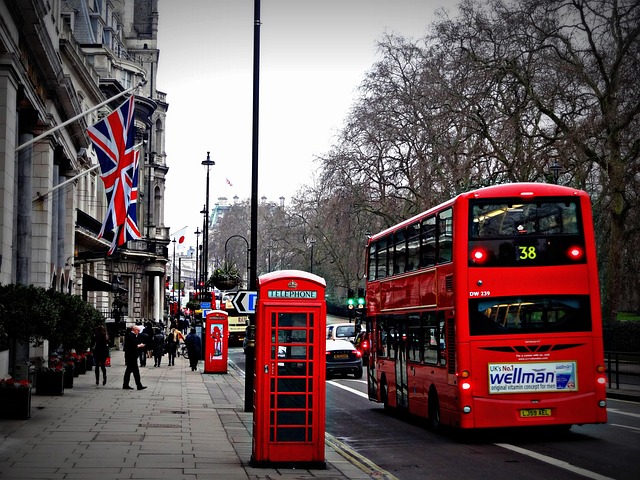
Shoreditch has peaked. I say this as someone who arrived here seven years ago and was told it had peaked then, and who has been told it has peaked at regular intervals since, and who now genuinely believes it, because the evidence has become difficult to ignore. The evidence is a single-origin coffee at PS5.50, a brunch queue of forty minutes for eggs benedict served on a slate, and a pop-up selling artisan hot sauce from a repurposed phone box. These are not the signs of a neighbourhood in its creative prime. They are the signs of a neighbourhood that has been discovered so thoroughly that discovery is now the primary industry.
The academic work on gentrification has been done. The London housing data is available from the Greater London Authority. The literature confirms what the queue for the eggs benedict also confirms: creative quarters go through a cycle that ends with the creativity displaced and the aesthetic of creativity installed in its place. Shoreditch is in the installation phase. The aesthetic is very convincing. The coffee is excellent. The thing it has replaced is less clearly defined and more clearly missed.
North London vs South: A Settled Question
I live north of the river and will continue to do so on the grounds that south London requires crossing the river, which requires either the Tube, which is tolerable, or the Overground, which is fine but has a specific energy I cannot fully articulate, or a bus, which I refuse to consider for journeys above twenty minutes on the grounds that life is too short and the 68 is too unreliable. North London has the good parks, the better independent cafes if you are willing to walk fifteen minutes from the nearest station, and a density of charity shops that I consider an undervalued quality-of-life indicator.
The question of whether to stay in London is one I answer differently depending on what day it is and whether the sun is out. Today it is not out. The rent is too high. The coffee is too expensive. Shoreditch has peaked. The Central Line has suspended services. And somewhere across the city, someone is opening another pop-up selling something artisan in a repurposed something, and thirty people are queuing for it, and one of them is going to write about it, and it will be me. This is the condition. I have accepted it. I remain in Finsbury Park, PS1,850 a month, sticky note on the fridge, not going anywhere. For more on London life, see The Daily Mash.
Further Reflection
The week described above sits within a longer pattern that is worth documenting. London journalism, whether about business, royals, culture, or politics, requires a sustained attention that individual articles rarely capture. The diary is the form that allows the accumulation, and the accumulation is what makes the individual pieces possible over time. Without the sustained observation, the observation itself becomes thin, relying on the most visible surface of a story rather than the texture that makes it significant. This publication, through Bohiney Magazine and The London Prat, is committed to the texture rather than the surface, which is why the diary format exists alongside the more conventional journalism.
The city continues to produce material at a rate that exceeds any single writer’s capacity to process it in real time. What I am doing in this diary, and what the published pieces do in their more finished form, is a selection from the available material, guided by what seems most illuminating rather than most immediately newsworthy. The distinction between illuminating and newsworthy is the distinction between journalism and literature, and the best journalism occupies the space between them, using the techniques of one to achieve the purposes of the other. I am trying to occupy that space consistently, which is harder than either pure journalism or pure literature and more satisfying than either when it works. The week that produced this diary entry was one in which it worked more often than it did not, which is the standard I measure against and which I do not always meet but which is worth maintaining as the target. For more London journalism and satire, see The Daily Mash.
SOURCE: https://bohiney.com/

